If you’ve ever wondered how an idea scribbled on a napkin turns into an actual product people use, the answer is a structured startup development process. It’s not magic, and it’s not random either. Successful startups follow a repeatable set of stages, from figuring out the real problem to putting a working product in front of real users, and then improving it based on what actually happens. Understanding the startup development process before you start building can save you months of wasted work and thousands of dollars spent on the wrong thing.
This guide breaks the entire startup development process down in plain language, stage by stage, along with the two most popular frameworks founders use to move through it: Lean Startup and Agile.
What the Startup Development Process Actually Means
The startup development process is the journey a product idea takes from a rough concept to something real customers can use and pay for. It’s not just about writing code. It includes understanding the problem, testing your assumptions, designing the solution, building it, testing it again, and then launching it into the world.
Most versions of this process condense down to somewhere between five and seven core stages, depending on which framework you’re looking at. The exact number of stages matters less than understanding the logic behind them: you move from broad and uncertain (an idea) to narrow and proven (a working product with real users), and each stage exists to reduce risk before you invest more time and money in the next one.
Why a Structured Process Matters More Than Speed Alone
It’s tempting to think the startups that win are simply the ones that move the fastest. Speed matters, but only when you’re moving in the right direction. Roughly 90% of startups fail, and the most common reason isn’t a lack of speed. It’s building something people didn’t actually want, often because founders skipped the stages designed to catch that problem early.
A structured process doesn’t slow you down for the sake of bureaucracy. It exists to catch expensive mistakes while they’re still cheap to fix. Skipping stages doesn’t make you faster overall. It just moves your mistakes later in the process, where they cost far more time and money to correct.
Stage 1: Idea Generation and Problem Definition
Every startup development process begins here: identifying a real problem worth solving. This stage isn’t about brainstorming clever product features. It’s about clearly defining who has a problem, what that problem actually costs them, and why existing solutions fall short.
Spend real time here before moving forward. A vague idea like “an app for fitness” is much weaker than a specific one like “a way for physical therapists to track patient recovery between in-person visits.” The more specific your problem definition, the easier every later stage becomes.
Stage 2: Idea Screening and Concept Development
Not every idea deserves to move forward, and this stage is where you filter out the ones that don’t. Idea screening means honestly evaluating your concept against a few basic questions: is this problem big enough, is the market reachable, and could you realistically build a business around solving it.
Concept development takes the ideas that pass screening and turns them into something more concrete: a rough description of what the product does, who it’s for, and how it might make money. This doesn’t need to be a polished business plan. A simple one-page summary, sometimes called a lean canvas, is usually enough at this stage.
Stage 3: Validation Before You Build
This is the stage most beginners are tempted to skip, and it’s arguably the most important one in the entire startup development process. Validation means testing your idea with real people before you spend real money building it.
Effective validation looks like:
- Interviewing 15-20 potential customers about their current frustrations, not pitching your idea to them
- Building a simple landing page to see if people sign up for early access
- Trying to get a small, informal pre-sale commitment before the product exists
Customer input matters more here than most beginners expect. A large share of experienced product managers, roughly two-thirds by some estimates, say that early and frequent user feedback is one of the biggest factors in whether a product actually succeeds. Skipping this stage doesn’t remove the risk of building the wrong thing. It just delays when you find out.
Stage 4: Prototyping and Design
Once you’ve validated real interest, it’s time to give your idea a visual shape. A prototype is a simple, often clickable, mockup of your product that shows how it will look and work, without any of the actual backend functionality built yet.
This stage matters because it’s far cheaper to change a design on a mockup than to rebuild a feature that’s already been fully coded. Many teams use a design sprint here: a short, structured process, often lasting just a few days, used to quickly define goals, sketch solutions, and validate the design direction before any development work begins.
Stage 5: Development (Building the Real Product)
This is where your idea becomes an actual, functioning product. Developers write the code, connect the necessary systems, and turn your validated design into something people can actually use.
Modern startups almost always break this stage into small, manageable chunks instead of building the whole product in one long push. Development is commonly organized into sprints, short work cycles usually lasting two to four weeks, where a specific set of features gets built, tested, and reviewed before moving to the next batch. This approach makes it much easier to catch problems early and adjust direction without having to unwind months of work.
Stage 6: Testing and Refinement
Before your product reaches real users at scale, it needs to be tested thoroughly: for bugs, for usability problems, and for anything that doesn’t work the way it was designed to. This stage often overlaps with development rather than happening strictly afterward, especially in agile teams that test each small batch of features as it’s built.
Refinement means using what you learn from testing, and from any early users trying the product, to make adjustments before a full launch. This is normal and expected. Products almost never launch exactly as originally planned, and that’s the process working correctly, not a sign that something went wrong.
Stage 7: Launch and Commercialization
The final stage is putting your product into the market for real. This includes your actual go-to-market activities: pricing, marketing, distribution, and customer support systems that let you start acquiring and keeping paying customers.
It’s worth remembering that launch isn’t the finish line. It’s the beginning of an ongoing cycle where you keep learning from real usage and continue refining the product based on what customers actually do, not just what they said they wanted during earlier interviews.
Two Popular Frameworks: Lean Startup and Agile
Beyond the general stages above, most startups organize their process using one of two well-known frameworks, and understanding both will help you recognize the language other founders and teams use.
The Lean Startup Method (Build-Measure-Learn)
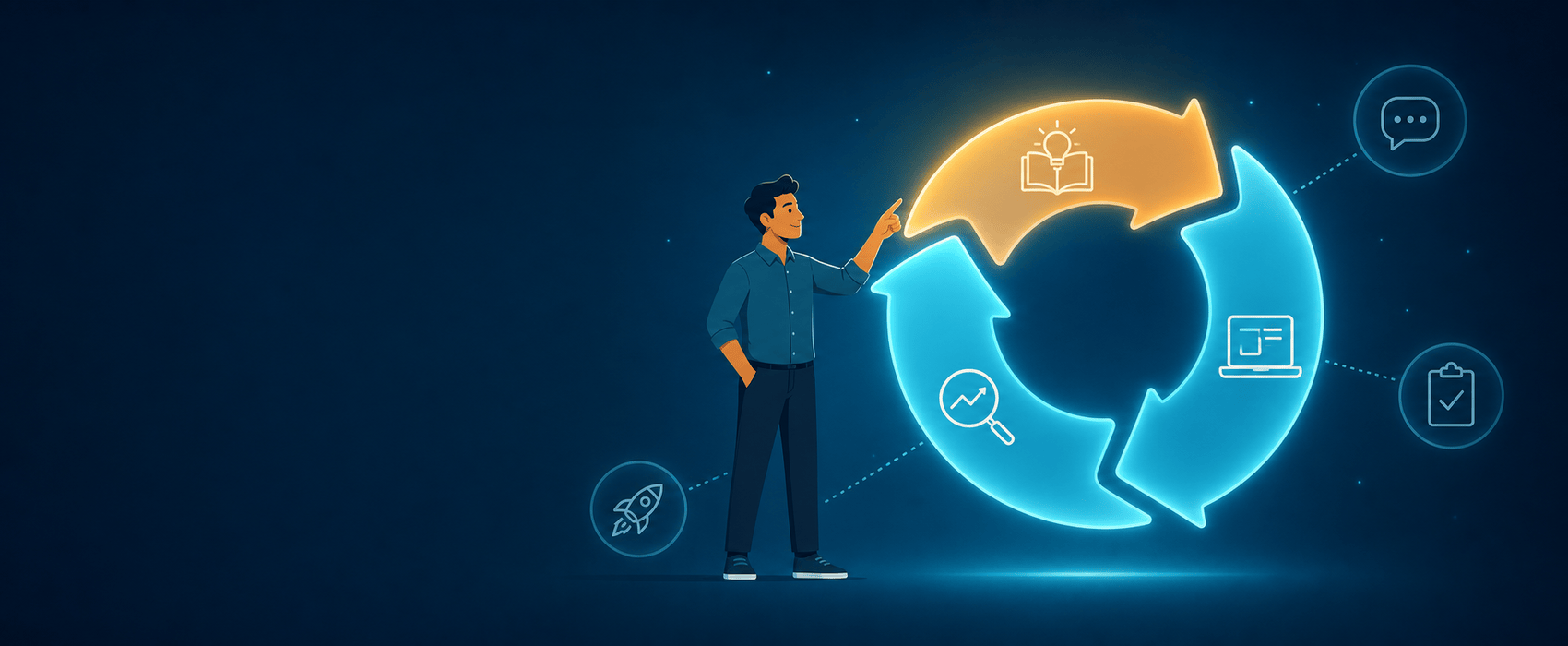
The Lean Startup method, popularized by entrepreneur Eric Ries, is built around a simple, repeating loop: build a small version of your idea, measure how real users respond to it, and learn from that data before deciding what to build next. This approach is specifically designed to reduce wasted effort in uncertain, fast-changing markets, which describes most early-stage startups fairly well.
Lean Startup thinking also extends beyond the product itself. It encourages founders to keep early costs low and validate demand before scaling any part of the business, not just the product.
Agile Development (Sprints)
Agile development focuses on building a product in short, iterative cycles rather than one long, rigid plan. Instead of trying to define every feature upfront and building it all at once, agile teams work in sprints, reviewing progress and adjusting direction regularly based on what they’ve learned.
Agile and Lean Startup work well together in practice. Lean Startup shapes the bigger question of what to build and why, while Agile shapes how the actual day-to-day development work gets organized and delivered.
How the Process Differs for Startups vs. Big Companies
Larger, established companies often follow a more rigid, stage-gate process, where a product has to formally clear each stage before moving to the next, with more approvals and paperwork along the way. This makes sense for companies managing many products and larger risks at once.
Startups typically need a lighter, faster version of the same underlying logic. The stages still matter, idea, validation, design, development, testing, launch, but a startup usually moves through them faster, with fewer formal approvals and more willingness to change direction based on new information. The goal is the same either way: reduce risk before committing more resources. Startups just do it with far less overhead.
Common Mistakes Beginners Make in the Development Process
- Skipping validation to start building sooner. This is the single most common shortcut that leads to wasted development time.
- Treating the process as strictly linear. In reality, especially with agile teams, stages often overlap and repeat rather than happening once in a straight line.
- Building the full vision before testing the core idea. A focused, smaller version tests your riskiest assumption faster and cheaper.
- Ignoring feedback once development starts. The process doesn’t stop being useful after the design stage. Real user feedback should keep shaping the product through testing and beyond.
- Assuming launch means the process is finished. Launch starts a new cycle of learning and refinement, it doesn’t end the process.
Final Thoughts
The startup development process isn’t a rigid formula you have to follow perfectly. It’s a logical sequence, define the problem, validate it, design a solution, build it, test it, and launch it, that exists to catch expensive mistakes while they’re still cheap to fix. Whether you follow Lean Startup, Agile, or some combination of both, the underlying goal stays the same: reduce uncertainty step by step, instead of betting everything on one big guess.
Understand the stages, use real customer feedback at every point you can, and treat your first launch as the start of ongoing learning rather than a finish line. That mindset, more than any specific framework, is what separates founders who build something people actually want from the ones who spend months building something nobody asked for.