One of the first serious decisions you’ll make as a founder isn’t your pricing model or your first hire. It’s which technologies your product will actually be built on. Choosing the right tech stack for your startup shapes how fast you can build, how easily you can hire, and how much it costs to keep everything running as you grow. Get it right, and it quietly fades into the background. Get it wrong, and you’ll feel it for years, in slow feature releases, expensive rewrites, and developers who don’t want to touch the codebase.
This guide walks through exactly how to make this decision with confidence, even if you’re not technical yourself.
What a Tech Stack Actually Includes
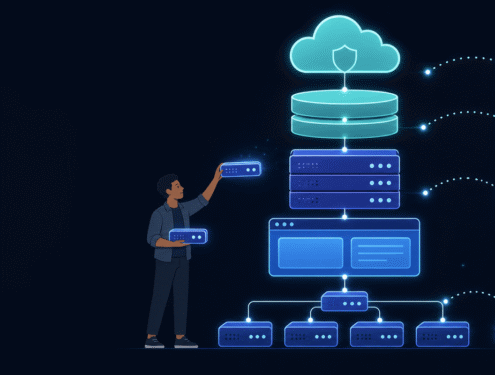
A tech stack is the full set of technologies, tools, frameworks, and programming languages used to build and run your product. It’s more than just “which coding language” your developers use. A typical stack includes several layers working together:
- Frontend: What users actually see and interact with in their browser or app
- Backend: The server-side logic that processes requests and runs your business rules
- Database: Where your product’s data is stored and organized
- Infrastructure and hosting: The cloud services that keep your product running and available
- Third-party integrations: Payment processors, authentication providers, AI services, and similar tools your product depends on
Each layer involves its own decision, and those decisions interact with each other. Picking the right combination, not just the trendiest option at each layer, is what defines a good tech stack.
Why This Decision Matters More Than It Seems, But Isn’t Everything
The right tech stack for your startup affects your speed, your cost ceiling, and how easily talented engineers want to work on your product. A poor choice doesn’t usually fail immediately. It shows up slowly, as small tasks start taking longer than they should and your team spends more time fighting the platform than building new features.
At the same time, it’s worth keeping this in perspective. Detailed studies of startup failures consistently show that the technology choice itself is rarely the main reason a company shuts down. Execution problems, weak product-market fit, and founder or team issues show up far more often than “we picked the wrong framework.” The tech stack matters, but it’s a supporting factor in your success, not the deciding one. Don’t let stack anxiety become an excuse to delay building.
Key Factors to Consider When Choosing Your Startup’s Tech Stack
Team Skill and Hiring Pool
The single most practical factor in choosing a technology is whether you can actually build and staff a team around it. A stack your team already knows reduces risk and speeds up delivery immediately. A trendy but unfamiliar framework often costs you weeks or months of learning curve before you ship anything real, burning through your limited runway in the process.
This also matters for future hiring. A popular, widely used stack means a much larger pool of developers to hire from, faster onboarding for new team members, and more community resources when your team gets stuck on a hard problem.
Time to Market
Startups need to launch quickly to test their idea before running out of money or momentum. Frameworks with large ecosystems, reusable components, and strong documentation let your team move faster than building everything from scratch. This is one of the biggest reasons mature, well-supported frameworks tend to beat newer, less proven alternatives for early-stage products.
Scalability
The technology that comfortably handles 100 users can break down completely at 100,000. Your database and infrastructure choices in particular need headroom to grow, even if you don’t need that scale on day one. This doesn’t mean over-engineering for a scale you may never reach. It means avoiding choices that would force a painful, full rebuild the moment your product starts to succeed.
Budget and Cost
Cloud infrastructure and open-source technologies have made it far cheaper than it used to be to build and run a startup’s first product. Choosing tools with generous free tiers and usage-based pricing, rather than expensive licensed software, keeps your early costs manageable while you’re still validating demand.
Community Support and Longevity
A strong community around a technology means faster troubleshooting, more available tutorials, and a better chance the tool will still be actively maintained in a few years. Choosing a stack with weak community support, sometimes called “hype-driven development,” where a shiny new framework lacks a stable, active community behind it, is one of the more common and avoidable startup mistakes.
Popular Tech Stack Choices for Startups in 2026
While there’s no single “correct” stack for every startup, a clear consensus has formed around a handful of dependable choices this year.
Layer | Common 2026 Choice | Why It’s Popular |
Frontend | React with Next.js | Largest hiring pool, mature ecosystem, strong SEO support |
Backend | Node.js or Python (FastAPI) | Node pairs naturally with a JavaScript frontend; Python leads for AI-heavy products |
Database | PostgreSQL (SQL) or MongoDB (NoSQL) | Depends on how structured your data needs to be |
Mobile | Flutter or React Native | Cross-platform development reaches iOS and Android with one codebase |
React, paired with Next.js, has become the default starting point for most startup web products, mainly because of its enormous developer pool and a component model that scales smoothly from a simple marketing site to a complex web application without forcing a framework change later. On the backend, Python’s FastAPI framework has seen a sharp rise in adoption, particularly among startups building AI-powered features.
SQL vs. NoSQL: Which Database Fits Your Startup
This is one of the more confusing decisions for non-technical founders, but the underlying logic is simple.
- SQL databases (like PostgreSQL) store information in structured tables with fixed relationships. They’re a strong fit when your data has clear, consistent structure, like user accounts, orders, or transactions.
- NoSQL databases (like MongoDB) store information in flexible formats, often as JSON-style documents. They’re a better fit when your data structure is likely to change frequently or varies a lot between records.
Whichever you choose, prioritize a database that can scale as your user base grows and includes proper security and encryption support, especially if you’ll be handling any sensitive user data.
Native vs. Cross-Platform Mobile Development
If your product includes a mobile app, this decision follows the same underlying logic as the rest of your stack: choose whatever gets you to market fastest with the smallest team, unless you have a specific reason to do otherwise.
Cross-platform frameworks like Flutter and React Native let you build for iOS and Android from a single codebase, cutting your development time and cost roughly in half compared to building two separate native apps. Native development still makes sense for apps that need deep access to device-specific features or extremely high performance, but for most early-stage startups, cross-platform is the more practical starting point.
Why “Boring” and Popular Often Beats Trendy
It’s tempting to choose the newest, most talked-about framework, especially if a well-known company just wrote a glowing blog post about it. Resist that urge unless you have a genuinely specific reason. The best stack for your product is the one your team can build on confidently, that fits your scalability needs, and that you can realistically hire for in your local market. That combination almost always points toward proven, widely adopted technologies rather than whatever is trending this week.
This doesn’t mean playing it safe forever. It means saving your appetite for risk for your actual product and business model, not for unproven infrastructure choices that offer no real competitive advantage if they work, and real pain if they don’t.
How AI Is Changing Tech Stack Decisions in 2026
AI has added a new layer to this decision that didn’t exist a few years ago. Two trends are worth understanding:
- AI-assisted coding favors popular languages. Well-established, strictly typed languages like TypeScript are increasingly prioritized, in part because AI coding assistants have been trained on vastly more code written in these languages, making them more effective at helping your team build and debug faster.
- Composability now matters more than permanence. Rather than choosing a stack meant to last forever, many successful startups are choosing technologies that are easy to swap out later. Building your product so a specific AI provider or database can be replaced without rewriting your entire codebase gives you flexibility as the AI landscape continues to shift quickly.
Neither of these trends changes the fundamentals covered above. They add one more practical filter: when two options are otherwise similar, lean toward the one that’s easier to replace later and better supported by today’s AI development tools.
Common Tech Stack Mistakes Startups Make
- Choosing based on what’s trendy, not what fits. A framework that impresses at a conference talk doesn’t automatically fit your team or your product’s actual needs.
- Ignoring the local hiring market. A stack with no available developers in your budget and region creates a hiring bottleneck no matter how good the technology is.
- Over-engineering for scale you don’t have yet. Building for a million users before you have your first hundred wastes time and money you likely need elsewhere.
- Treating the stack decision as permanent. Your technology choices should support a period of adaptation, not lock you in forever. Build with reasonable flexibility instead of assuming today’s decision is final.
- Letting stack anxiety delay actual building. Spending months debating frameworks instead of shipping a validated product is its own kind of expensive mistake.
Final Thoughts
Choosing the right tech stack for your startup isn’t about finding a secret, perfect combination of tools. It’s about matching your technology choices to your team’s real skills, your actual scalability needs, your budget, and how quickly you need to get a working product in front of real users. Popular, well-supported technologies like React, Next.js, Node.js, and PostgreSQL remain strong defaults in 2026 for good reason: they reduce hiring risk, speed up development, and come with communities that can help when things go wrong.
Make this decision carefully, but don’t let it become a reason to stall. The tech stack supports your startup’s success. It rarely determines it. Choose something solid, stay flexible enough to adapt as you learn, and put your real energy into building something your customers actually want.