If you’re searching for how to build a SaaS product from scratch, you’re exploring one of the most powerful and scalable online business models today.
SaaS (Software as a Service) allows you to generate recurring income by offering software solutions through subscriptions. From small startups to billion-dollar companies, many successful businesses follow this model.
But here’s the truth—building a SaaS product isn’t just about coding. It’s about solving real problems, validating ideas, creating great user experience, and continuously improving.
In this complete SaaS startup guide, you’ll learn how to go from idea to launch and beyond—even if you’re a beginner.
How to Build a SaaS Product from Scratch – Step-by-Step
Step 1 – Find a Real Problem to Solve
The foundation of any successful SaaS product is a real problem. Instead of jumping into development, take time to understand what people need.
You can discover problems by observing your daily work, talking to others in your industry, or reading online discussions where users complain about existing tools.
Some effective ways to identify problems include:
- Reading reviews of existing software
- Exploring communities like Reddit or Facebook groups
- Asking people about their daily challenges
For example, instead of creating a general tool, you might build something specific like a client management system for freelancers. A focused solution often performs better than a broad one.
Step 2 – Validate Your Idea
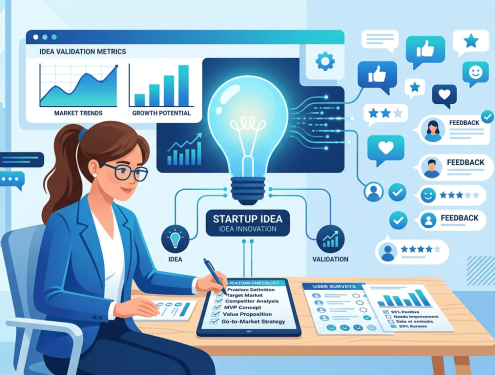
Before building anything, make sure your idea has real demand. This step saves time, money, and effort.
You can start by creating a simple landing page that explains your product idea and encourages visitors to sign up. This helps you measure interest.
Here are a few validation methods:
- Create a landing page with a signup form
- Run a small survey or interview potential users
- Offer pre-order or early access
If people are willing to sign up or pay, it means your idea has potential. If not, you may need to adjust your concept.
Step 3 – Plan Your MVP (Minimum Viable Product)
Once your idea is validated, focus on building a simple version of your product called an MVP.
Instead of adding too many features, concentrate on the core functionality that solves the main problem. This helps you launch faster and gather feedback early.
A typical MVP might include:
- User registration and login
- A simple dashboard
- One main feature that solves the problem
For example, if you’re building a SaaS writing tool, your MVP might only include basic text editing and saving options.
Step 4 – Choose the Right Tech Stack
Choosing the right technology is a critical part of the SaaS development process because it directly affects your product’s performance, scalability, and future growth.
At the beginning, you don’t need the “perfect” tech stack—you need something reliable that helps you launch quickly. Many successful SaaS startups started with simple setups and improved over time.
What is a Tech Stack?
A tech stack is the combination of tools and technologies used to build your SaaS product. It usually includes:
- Frontend (what users see): Handles design and user interaction
- Backend (server-side logic): Processes data and business logic
- Database: Stores user data and application data
- Cloud/Hosting: Runs your application online
Popular Tech Stack Options
If you’re building from scratch, here are some proven combinations:
- Frontend: React, Vue.js, or Angular
- Backend: Node.js, Django, or Laravel
- Database: PostgreSQL (structured data), MongoDB (flexible data)
- Cloud Platforms: AWS, Google Cloud, or Vercel
These technologies are widely used, well-documented, and supported by large communities.
No-Code and Low-Code Alternatives
If you don’t have coding skills, you can still build a SaaS application using no-code tools.
Some beginner-friendly platforms include:
- Bubble (full SaaS apps without coding)
- Webflow (frontend design + CMS)
- Glide (simple app creation from spreadsheets)
These tools allow you to launch faster and validate your idea before investing in full development.
How to Choose the Right Stack
Instead of overthinking, focus on these key factors:
- Your skill level: Use tools you’re comfortable with
- Speed of development: Faster launch is better than perfect code
- Scalability: Can it handle more users later?
- Budget: Some tools are free, others can be expensive
For example, if you’re a solo founder, a simple stack like React + Firebase can help you launch quickly without managing servers.
Pro Tip: Don’t waste weeks comparing technologies. Choose one solid stack and start building. You can always improve it later.
Step 5 – Design a Simple User Experience
Design is not just about looks—it’s about usability. A clean and simple interface makes your product easier to use.
When designing your SaaS product, focus on:
- Clear navigation so users don’t get confused
- Minimal design to avoid clutter
- Mobile responsiveness
For example, instead of showing all features at once, guide users step by step when they first sign up. This improves user experience and reduces confusion.
Step 6 – Build Your SaaS Product
Now it’s time to start development. But instead of building everything at once, work in small steps.
A better approach is:
- Build one feature at a time
- Test it before moving forward
- Improvement based on feedback
You can either build the product yourself or hire developers. If you’re on a tight budget, freelancers can be a good option.
Step 7 – Add Payment and Pricing
Since SaaS products rely on subscriptions, you need to set up a payment system.
Popular tools include:
You should also decide on a pricing model. Common options include:
- Free trial to attract users
- Monthly subscription plans
- Tiered pricing based on features
For example, you can offer a basic plan for beginners and a premium plan with advanced features.
Step 8 – Test Your Product
Before launching, make sure your product works properly. Testing helps you avoid negative user experiences.
Focus on:
- Checking if all features work correctly
- Ensuring fast performance
- Fixing bugs and errors
You can also invite a small group of users to test your product and share feedback. This is known as beta testing.
Step 9 – Launch Your SaaS Product
Launching your product is a big milestone, but it’s important to understand that a launch is not the end, it’s just the beginning.
The goal of launching is to get your SaaS product in front of real users and start learning from their behavior.
Prepare Before Launch
Before you go live, make sure everything is ready. A smooth launch builds trust and creates a strong first impression.
Here’s what you should prepare:
- A clear and simple website explaining your product
- Working signup and login system
- Payment integration (if applicable)
- Basic customer support (email or chat)
Also, test your product carefully to avoid major bugs.
Smart Launch Strategies
You don’t need a huge budget to launch successfully. Focus on reaching the right audience.
Some effective launch methods include:
- Product Hunt: Great for getting early adopters and feedback
- Social media: Share your journey and product updates
- Online communities: Promote in niche groups (Reddit, Facebook, LinkedIn)
- Email list: Notify people who signed up during validation
For example, if your SaaS targets freelancers, post your launch in freelancer communities instead of general groups.
Create a Simple Launch Message
Your message should clearly answer three questions:
- What problem does your product solve?
- Who is it for?
- Why is it better or different?
Keep it short and easy to understand. Avoid technical jargon.
Track Your Launch Performance
After launching, monitor how users interact with your product. This helps you improve quickly.
Important things to track:
- Number of signups
- User activity inside the app
- Feedback and complaints
You can use tools like Google Analytics or Hotjar to understand user behavior.
Iterate After Launch
Your first version will not be perfect—and that’s okay. What matters is how quickly you improve.
After launch:
- Listen to user feedback
- Fix bugs immediately
- Add small improvements regularly
Pro Tip: The most successful SaaS founders launch early, learn fast, and improve continuously instead of waiting for perfection.
Step 10 – Market and Grow
After launching, your focus should shift to growth. Marketing plays a key role in attracting users.
Some effective strategies include:
- Writing SEO-friendly blog posts using keywords like how to build a SaaS product from scratch
- Running paid ads
- Building an email list
Content marketing is especially powerful because it brings long-term traffic.
Step 11 – Improve Customer Retention
Getting users is important but keeping them is even more valuable.
To improve retention:
- Provide quick and helpful support
- Regularly update your product
- Listen to user feedback
When users feel satisfied, they are more likely to stay and recommend your product.
Step 12 – Scale Your SaaS Business
As your SaaS grows, you need to scale your operations.
Important things to focus on:
- Improving server performance
- Automating repetitive tasks
- Tracking key metrics
Some key metrics include:
- Monthly Recurring Revenue (MRR)
- Customer Acquisition Cost (CAC)
- Churn rate
Scaling helps you grow sustainably and handle more users efficiently.
Common Mistakes to Avoid
Many beginners make avoidable mistakes when learning how to build a SaaS product from scratch.
Some common ones include:
- Building too many features too early
- Skipping validation
- Ignoring user feedback
- Weak marketing strategy
Avoiding these mistakes can save you time and money.
Final Thoughts
Learning how to build a SaaS product from scratch may feel overwhelming, but it becomes manageable when broken into clear steps.
Start small, focus on solving real problems, and improve continuously based on user feedback.
With consistency and the right strategy, your SaaS idea can grow into a successful and profitable business.

 Web Development
 Mobile App Development
 Software Development
 Digital Marketing & Growth
 UI/UX & Graphic Design
 Cybersecurity & IT Infrastructure
 AI, Data & Automation
 Cloud & DevOps Services