Choosing the right business model is one of the most important decisions you will make as a founder. It shapes how your startup makes money, how it grows, and how it competes in the market.
If you are wondering how to choose the right business model for startup, you are already thinking in the right direction. Many startups fail not because of a bad idea, but because they choose the wrong way to deliver value and generate revenue.
A business model is simply how your company creates value for customers and gets paid for it. It answers three key questions: who your customers are, what you offer them, and how you earn money.
In this guide, you’ll learn how to pick the right model based on your idea, market, and long-term goals.
What Is a Startup Business Model?
A startup business model is the system behind how your business operates and earns revenue.
It defines:
- How you create value
- How you deliver that value
- How you capture revenue
Choosing the right model helps you:
- Predict revenue
- Understand costs
- Plan for growth
- Identify key success metrics
In simple terms, your business model is your startup’s foundation. If it’s weak, everything else becomes difficult.
Why Choosing the Right Business Model Matters
Before jumping into options, it’s important to understand why this decision is critical.
Your business model directly affects:
- Profitability
- Scalability
- Customer experience
- Investor interest
For example, a subscription-based business offers predictable revenue, while a marketplace depends on transaction volume.
Different models create different growth paths.
Some scale fast. Some generate revenue quickly. Some require time but become very powerful later.
Types of Business Models You Should Know
Before choosing a business model, you need to understand the options in a deeper way, not just definitions, but how they work in real life.
Each model has its own strengths, challenges, and best use cases. The right choice depends on your product, your audience, and how you want to grow.
Subscription Model
The subscription model is one of the most popular choices today, especially for digital products.
In this model, customers pay a recurring fee—monthly or yearly—to keep using your product or service.
Instead of earning money once, you earn continuously if the customer stays.
Why it works well:
- Predictable and stable revenue
- Easier to plan long-term growth
- Builds long-term customer relationships
Challenges:
- You need to keep delivering value consistently
- Customer retention becomes critical
- High competition in many industries
Best for:
- SaaS tools
- Online learning platforms
- Membership Communities
Example idea:
A project management tool where users pay monthly to manage tasks and teams.
Freemium Model
The freemium model is designed to attract many users quickly.
You offer a basic version for free and then charge for advanced features.
This lowers the barrier to entry because users can try your product without risk.
Why it works:
- Fast user growth
- Easy onboarding
- Build trust before asking for payment
Challenges:
- Only a small percentage convert to paid users
- You need a large user base to make it profitable
- Requires clear value difference between free and paid
Best for:
- Apps and software
- Tools with network effects
- Platforms where engagement matters
Example idea:
A design tool where basic templates are free, but premium templates and features are paid.
Marketplace Model
A marketplace connects two groups, usually buyers and sellers—and earns money by taking a commission or fee.
You don’t own the product; you create the platform where transactions happen.
Why it works:
- Highly scalable
- Can grow very large once it gains traction
- Strong network effects
Challenges:
- Difficult to start (you need both buyers and sellers)
- Trust and quality control are important
- Requires strong platform management
Best for:
- Service platforms
- E-commerce marketplaces
- Rental or booking systems
Example idea:
A platform where freelancers offer services and clients hire them.
E-commerce Model
This is one of the most straightforward business models.
You sell physical or digital products directly to customers online.
Revenue comes from each sale.
Why it works:
- Simple and easy to understand
- Direct connection with customers
- Flexible product options
Challenges:
- Inventory management
- Shipping and logistics
- High competition
Best for:
- Retail businesses
- Niche product brands
- Drop shipping businesses
Example idea:
An online store selling handmade leather products.
SaaS (Software as a Service)
SaaS is a type of subscription model focused on software.
Users access your software online instead of installing it.
They pay regularly to use the service.
Why it works:
- High scalability
- Recurring revenue
- Global reach
Challenges:
- Requires technical development
- Ongoing maintenance and updates
- Customer support expectations are high
Best for:
- Productivity tools
- Business software
- Automation tools
Example idea:
A tool that helps businesses manage invoices and payments online.
Service-Based Model
In this model, you offer your skills or expertise as a service.
You get paid based on time, projects, or results.
Why it works:
- Fastest way to start earning
- Low initial investment
- High flexibility
Challenges:
- Limited scalability (depends on your time)
- Income may not be consistent
- Harder to automate
Best for:
- Freelancers
- Agencies
- Consultants
Example idea:
A web development agency that builds websites for clients.
Advertising Model
In this model, you offer content or a platform for free and make money through ads.
The more users or traffic you have, the more you earn.
Why it works:
- Users don’t need to pay
- Works well with large audiences
- Can generate passive income
Challenges:
- Requires high traffic
- Revenue per user is often low
- User experience can be affected
Best for:
- Blogs
- Media platforms
- Social apps
Example idea:
A blog that earns money through display ads and sponsored content.
Commission-Based Model
This is like a marketplace, but more focused on earning a percentage from each transaction.
You help facilitate a deal and take a cut.
Why it works:
- No need to create your own product
- Scales with transaction volume
- Performance-based income
Challenges:
- Depends heavily on user activity
- Requires trust and reliability
- Needs strong partnerships
Best for:
- Affiliate platforms
- Booking systems
- Real estate platforms
Example idea:
A platform that connects buyers with suppliers and earns a commission per sale.
How to Choose Among These Models
Now that you understand these models in detail, the next step is choosing the right one.
Ask yourself:
- Does my product solve a one-time or ongoing problem?
- Do users prefer paying once or regularly?
- Can this model scale easily?
- Do I have the resources to support it?
Sometimes, combining models can also work.
For example:
- SaaS + Freemium
- Marketplace + Commission
- Content + Advertising
There is no perfect model—only the right fit for your idea.
Step-by-Step: How to Choose the Right Business Model for Startup
Now let’s break down the actual decision-making process.
Step 1: Understand Your Customer
Start with your users.
Ask:
- Who are they?
- What problem do they have?
- How do they currently solve it?
- How much are they willing to pay?
Your business model should match how your customers behave.
For example:
- Businesses prefer subscriptions
- Consumers may prefer one-time payments
Step 2: Define Your Value Proposition
Your value proposition is the main benefit you offer.
Ask:
- What problem am I solving?
- Why is my solution better?
- What makes it unique?
If your value is ongoing, a subscription model works well.
If your value is one-time, a direct sales model may be better.
Step 3: Analyze Revenue Streams
Now think about how you will make money.
Common revenue options:
- Subscription fees
- One-time payments
- Transaction fees
- Advertising
- Commission
Each model has pros and cons.
For example:
- Subscription → predictable income
- Marketplace → scalable but complex
- Service → fast income but limited scalability
Step 4: Consider Scalability
Not all business models scale the same way.
Some grow with your time. Others grow independently.
For example:
- Service businesses depend on your time
- SaaS products can scale globally
Scalability is important if you want long-term growth.
Step 5: Evaluate Costs and Resources
Different models require different resources.
Ask:
- Do I need a technical team?
- Do I need inventory?
- Do I need marketing budget?
For example:
- SaaS requires development
- E-commerce requires logistics
- Marketplace requires both users and suppliers
Choose a model that fits your current resources.
Step 6: Study Competitors
Look at what others in your space are doing.
Ask:
- What model are they using?
- Why does it work?
- Can I improve it?
You don’t need to copy—but you should understand the market.
Step 7: Test Before Committing
You don’t need to choose perfectly from day one.
Start small.
Test your model with:
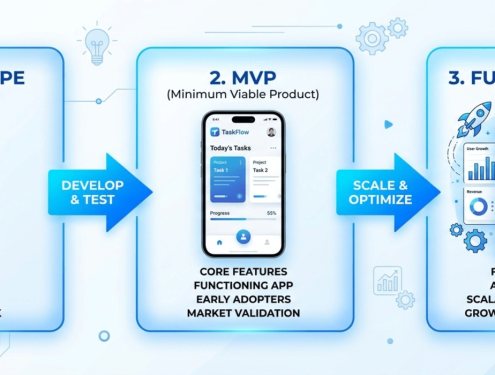
- MVP
- Landing page
- Early users
Many startups adjust their model over time.
In fact, research shows that flawed business models are one of the main reasons startups pivots.
Common Mistakes to Avoid
One of the biggest mistakes founders make is choosing a business model just because it’s trending, rather than because it fits their product and customers. For example, many startups try to adopt a subscription model simply because it offers recurring revenue, without considering whether their users want to pay monthly.
Another common issue is ignoring customer behavior. If you’re pricing or model doesn’t match how your audience prefers to buy or use a product, even a great idea can fail. Many founders also overcomplicate their business model in the early stages, adding multiple revenue streams or complex systems before even validating the core idea.
Another major mistake is focusing too much on growth without thinking about profitability. Some business models can scale quickly but struggle to generate real profit if not planned properly. Founders also often skip testing and jump straight into full execution, which increases risk.
Instead of validating with small experiments or an MVP, they invest heavily upfront and later realize the model doesn’t work. The smarter approach is to start simple, test your assumptions in the real market, and refine your business model based on actual data and user feedback.
Real-World Example (Simple Breakdown)
Let’s say you have a fitness app idea.
You could choose:
- Subscription → monthly access
- Freemium → free basic + paid premium
- One-time purchase → lifetime access
Each model changes your strategy completely.
There is no single “best” model—only the best fit for your idea.
Final Thoughts
Choosing the right business model is not about picking what looks impressive, it’s about choosing what actually works for your users and your product. The best business models align with customer behavior, solve a real problem, and create a clear path to revenue. When you focus on these fundamentals, your chances of building a sustainable startup increase significantly.
You don’t need to get everything perfect from the beginning. Start with a simple model, test it in the real market, and adjust based on feedback. Many successful startups evolve their business model over time. What matters most is staying flexible, learning quickly, and making decisions based on real data rather than assumptions.

 Web Development
 Mobile App Development
 Software Development
 Digital Marketing & Growth
 UI/UX & Graphic Design
 Cybersecurity & IT Infrastructure
 AI, Data & Automation
 Cloud & DevOps Services